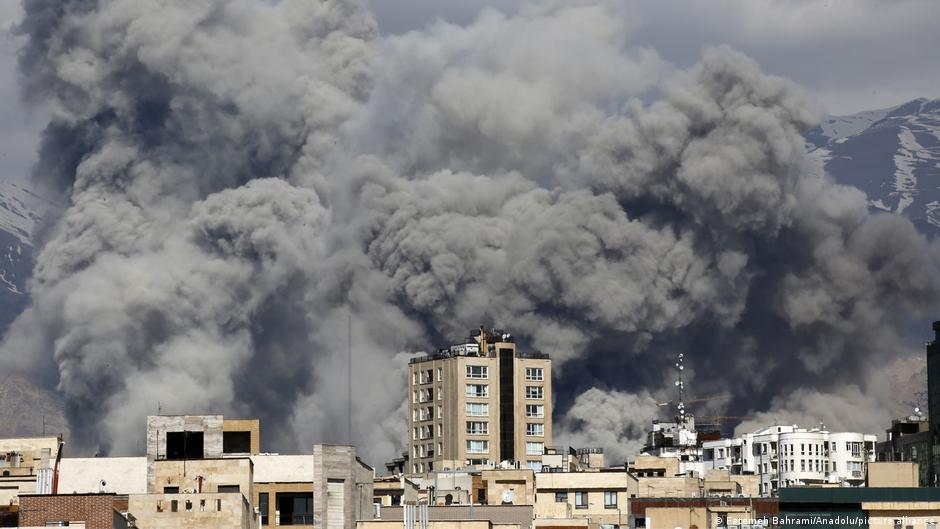
Middle East on Edge: Iran Retaliates Against US & Israel
The Middle East simmers on the precipice of an unprecedented regional conflict, as Iran has unleashed retaliatory strikes against US and Israeli targets following a devastating joint offensive by Washington and Jerusalem. This escalating US-Israel Attacks on Iran: Casualties, Retaliation & Global Fallout has not only claimed lives on all sides but has also plunged an already volatile region into a new era of uncertainty, with global repercussions looming large.
The Unprecedented Offensive: US-Israeli Strikes Rock Iran
The recent intensification of hostilities began with a joint US-Israeli military campaign that struck deep into Iranian territory, targeting critical infrastructure and, most significantly, the very heart of the Islamic Republic's leadership. US President Donald Trump confirmed that American forces had struck Iran's three main nuclear sites, a move he described as a "spectacular military success." The President also warned Tehran of more devastating attacks if it failed to agree to peace, underscoring the severity of the campaign.
The most profound impact of these strikes was the reported killing of Supreme Leader Ayatollah Ali Khamenei and other top security officials. This dramatic decapitation strike against Iran's leadership represents a monumental escalation, fundamentally altering the geopolitical landscape. Republican Senator Lindsey Graham lauded the operation, stating that "the world is a better place" without Khamenei, and suggesting that "the mothership of terrorism is sinking" with the leader of the largest state sponsor of terrorism and his inner team gone.
However, the offensive was not without cost to the aggressors. Reports indicate three US soldiers were killed and five seriously wounded, reportedly based in Kuwait. The human toll on the Israeli side was also significant, with Israeli police confirming nine deaths and 11 missing in Beit Shemesh after an Iranian missile attack. The audacious targeting of such high-value Iranian assets, combined with President Trump's subsequent call for Iranians to "rise up to topple the Islamic Republic," signalled a clear intent to fundamentally reshape Iran's political future. For a deeper dive into these initial strikes, read our related article: Khamenei Killed: US-Israel Strikes Escalate Iran Conflict.
Iran's Swift Retaliation: A Region on High Alert
True to its long-standing threats, Iran wasted no time in executing its counter-response. Following the devastating US-Israeli strikes, Iran's Revolutionary Guard launched its own offensive, targeting US military bases in Bahrain and the UAE. While the US military denied Iranian claims that the USS Abraham Lincoln aircraft carrier was struck, stating the "missiles launched didn’t even come close," these actions underscore Tehran's resolve to demonstrate its retaliatory capabilities and inflict damage on its adversaries.
Simultaneously, the devastating Iranian missile attack on Beit Shemesh in Israel served as a stark reminder of the direct threat posed by Tehran's arsenal, resulting in significant casualties. The Revolutionary Guard has further threatened to launch its "most intense offensive operation" ever on Israeli and US military installations, indicating that the current retaliatory measures might only be a prelude to greater aggression. The phrase "israel teheran angriff" now encapsulates a direct and bloody exchange, far removed from proxy conflicts.
The immediate fallout sent shockwaves across the Gulf region. The Gulf Cooperation Council (GCC), comprising the UAE, Bahrain, Saudi Arabia, Oman, Qatar, and Kuwait – all of whom have experienced Iranian strikes – convened via video-link to formulate a unified response. Foreign ministers reviewed the "extensive damage resulting from the treacherous Iranian attacks" and discussed steps for restoring stability. A joint statement pledged that Gulf countries "will take all necessary measures to defend their security and stability... including the option of responding to the aggression," while also calling for the "immediate cessation of these attacks." This unified stance from Gulf states signals a potential broadening of the conflict should Iranian aggression continue.
A Volatile Geopolitical Chessboard: Global Reactions and Strategic Dilemmas
The escalation of the Israel-Tehran conflict has elicited a spectrum of global reactions, highlighting the international community's profound concern. While UK Prime Minister Keir Starmer affirmed his acceptance of a US request to use UK bases for "defensive" strikes against Iran, indicating allied support, not all international players viewed the US-Israeli actions favorably. The Canadian leader, for instance, suggested that the US-Israeli attacks on Iran appeared to be "inconsistent with international law," raising critical questions about the legality and ethics of the operations.
Beyond official statements, reactions ranged from angry protests to outright celebrations in various parts of the world, reflecting deeply divided opinions on the legitimacy and implications of the strikes. Calls by world leaders for a return to negotiations underscore a desperate hope for de-escalation, even as the immediate prospects for diplomacy appear dim.
A significant concern among lawmakers from both major US political parties is the glaring absence of a "day-after" strategy for Iran following the joint US-Israeli strikes that decimated its leadership. This strategic void raises crucial questions about the long-term stability of the region and what form Iran's governance might take in a post-Khamenei era. President Trump's urging of Iranians to rise up is a powerful political gambit, but without a robust plan for transitional governance, it risks further destabilizing a nation already reeling from severe external pressure. The postponement of Supreme Leader Ayatollah Ali Khamenei's funeral amid explosions further illustrates the immediate chaos and uncertainty gripping Iran.
Navigating the Crisis: Implications for Regional Stability and Beyond
The direct exchanges characterizing this current Israel-Tehran offensive have far-reaching implications that extend beyond the immediate battlegrounds. The stability of the Gulf region, as stated by the GCC, "is not merely a regional concern but a fundamental pillar of global economic stability." Disruptions to critical shipping lanes, particularly the Strait of Hormuz, could trigger severe spikes in global oil prices and wreak havoc on international supply chains, affecting economies worldwide.
- Economic Volatility: Businesses with operations or supply chains passing through the Middle East must immediately conduct thorough risk assessments. Anticipate potential disruptions to shipping, increased insurance premiums, and fluctuating energy costs.
- Humanitarian Concerns: The escalating conflict invariably leads to increased civilian casualties and humanitarian crises. International organizations and aid agencies must brace for heightened demand for assistance and prepare for the displacement of populations.
- Diplomatic Pathways: Despite the current militaristic posture, calls for de-escalation and a return to negotiations are crucial. Global powers must actively seek diplomatic channels to prevent the conflict from spiraling into a full-scale regional war, potentially involving a multitude of actors and proxies.
- Citizen Preparedness: For citizens residing in or travelling to the region, it is paramount to stay informed through official government advisories, maintain emergency plans, and be aware of security protocols.
The decision by the US to join Israel's military campaign, long before President Trump's self-imposed two-week deadline, marked a major escalation and risks opening a new era of instability. The intricate web of alliances and rivalries in the Middle East means that any significant action by one party can trigger unpredictable reactions from others. This makes a clear, coherent, and internationally supported long-term strategy for Iran and the wider region not just advisable, but absolutely essential.
Conclusion
The Middle East stands at a critical juncture, with the US-Israeli strikes against Iran and Tehran's subsequent retaliation ushering in an era of unprecedented direct confrontation. The significant casualties on all sides, the targeting of top leadership and critical infrastructure, and the unified stance of Gulf states underscore the gravity of the situation. As the world watches with bated breath, the urgent need for responsible statecraft, clear diplomatic strategies, and a credible "day-after" plan for Iran becomes paramount to de-escalate tensions and avert a full-blown regional catastrophe that would reverberate across the globe.